Course Overview
General
Target Audience
Learner Objectives
Upon completion of this presentation, participants will be able to:
1) Identify three causes of obscure GI bleeding and the various diagnostic and treatment modalities.
2) Discuss various aspects of patient teaching regarding treatment options and expectations
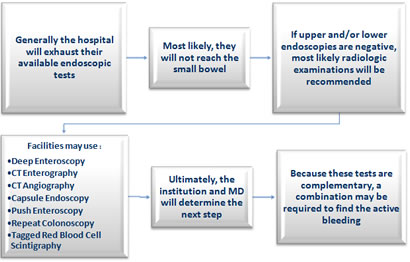
3) Contrast the diagnostic tools used for OGIB
Teaching Methodology
Participants will read the printed content and once that is done, they will complete the evaluation and post-test. A passing score of 8/10 is required to earn a certificate. The post-test can be retaken until a passing grade is achieved. Once the test is passed, a certificate of completion will be available for download.
Contact Hours
Accreditation
Provider approved by the California Board of Registered Nursing, Provider Number 08747, the District of Columbia Board of Nursing, Provider Number 50-574, the Florida Board of Registered Nursing, Provider Number 50-574 and the Georgia Board of Nursing, Provider Number 50-574. It is the responsibility of the licensee to verify acceptance of contact hours for relicensure.
According to the criteria of the American Board of Certification for Gastroenterology Nurses (ABCGN), the approved hours in the activity are considered GI Specific for the purpose of recertification by contact hours through the ABCGN.
Disclosures
1. Successful completion: Participants must complete the entire program, register, achieve a score of 80% on the post-test and submit required documentation.
2. Conflict of interest: Planners disclose no conflict of interest. The speakers disclose salary or honorarium from the commercial support entity; they have signed a statement agreeing to present material fairly and without bias.
3. Commercial company support: Fees are underwritten by education funding provided by Medtronic.
4. Non-commercial company support: None.
5. Alternative/Complementary therapy: None.
6. Implicit Bias: Educational Dimensions supports efforts to eliminate health care disparities and implicit bias in medical treatment along the lines of race, ethnicity, gender identity, sexual orientation, age, socioeconomic status and other characteristics in CNE activities addressing direct patient care.